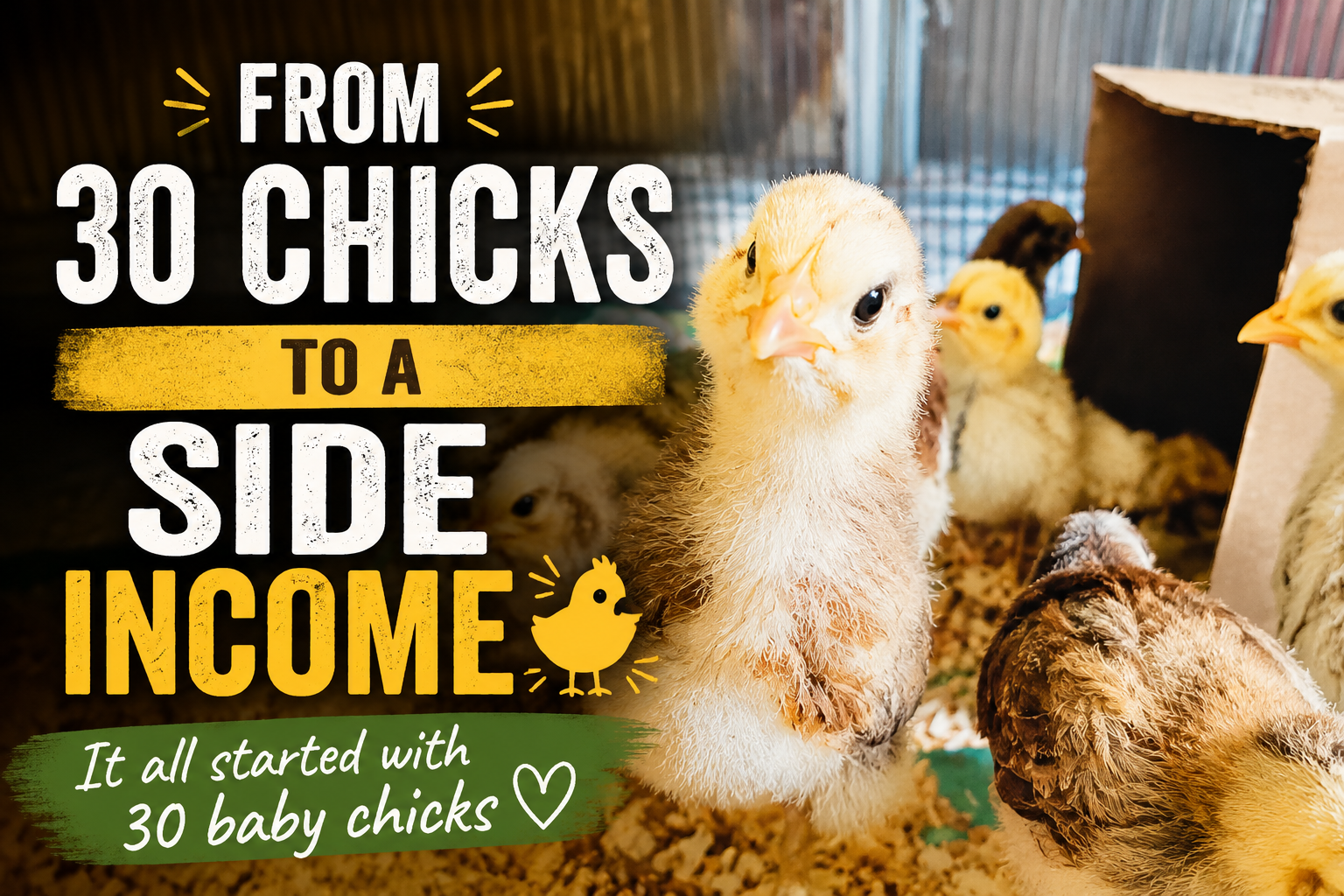
I never expected to learn how to turn your chickens into a hatching egg business, but that’s exactly what happened when I started with about 30 baby chicks living in my house.
Although, if I’m being fair, my chicken story actually started a whole lot earlier than that.
I’ve been raising chickens since I was about five years old. So chickens weren’t exactly new to me. But in 2023, I decided to do something with them that I’d never done before.
I was going to turn my chickens into a little business.
With avian flu affecting poultry and egg supplies, I had a feeling chickens—and especially hatching eggs—were going to become more popular.
So I started planning.
When I first started learning how to turn my chickens into a hatching egg business, I had no idea how much I would learn along the way.
Six Breeds and One Big Idea
Six Breeds and One Big Idea
I ordered six different breeds of chickens: Ameraucanas, Brahmas, Bantam Brahmas, Easter Eggers, Cochins and Silkies.
The breeds weren’t chosen randomly. I wanted a variety of egg colors, including brown and white eggs, but I especially wanted Easter Eggers because they are bred for their beautiful blue and green eggs.
But I wasn’t planning to just collect eggs for my own kitchen.
My goal was to eventually sell hatching eggs.
And that created my first big challenge.
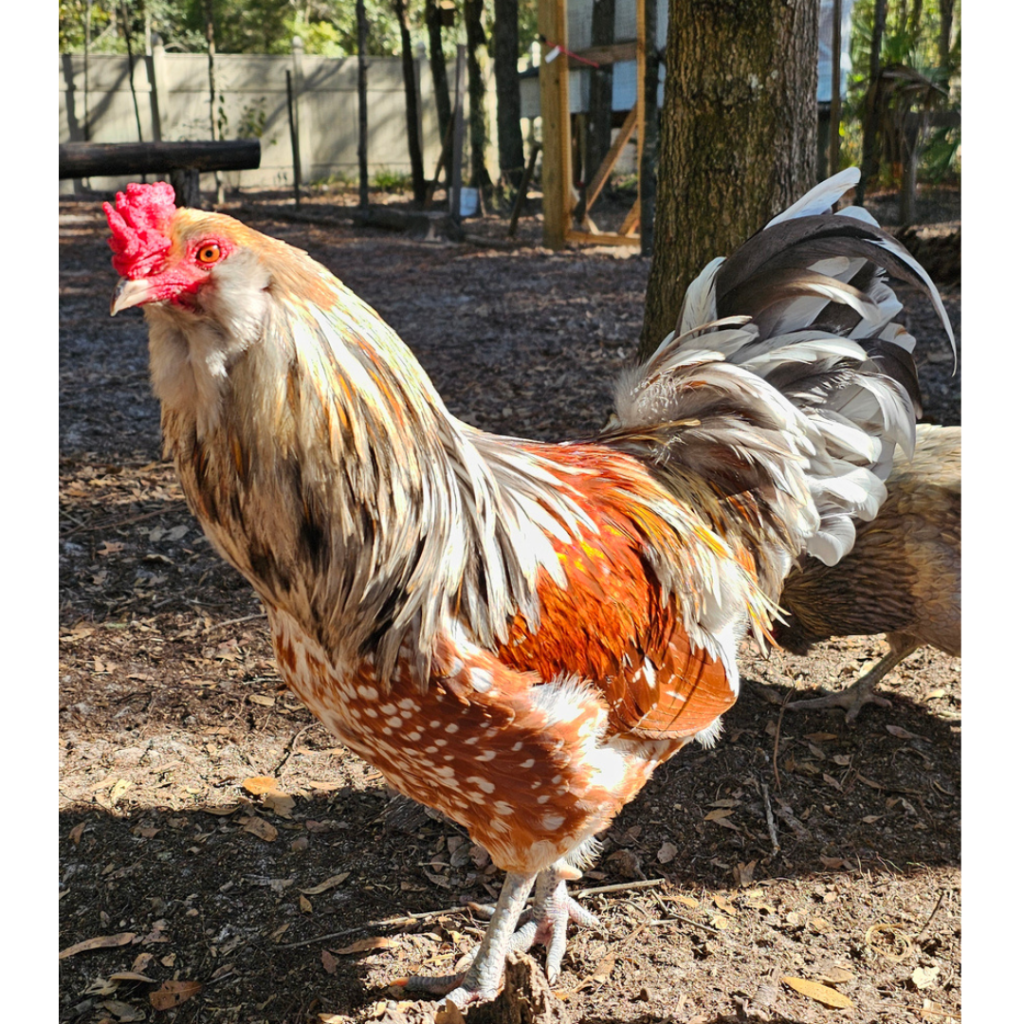
If I wanted to sell breed-specific hatching eggs, I needed to keep my breeding groups separated. That meant I couldn’t simply let all 30 chickens run around together with all the roosters.
I needed separate areas.
Which meant separate fencing.
Separate coops.
And yes… separate roosters.
We’ll get to the roosters later.
Especially Lucifer. 😂
How in the World Was I Going to Build All Those Coops?
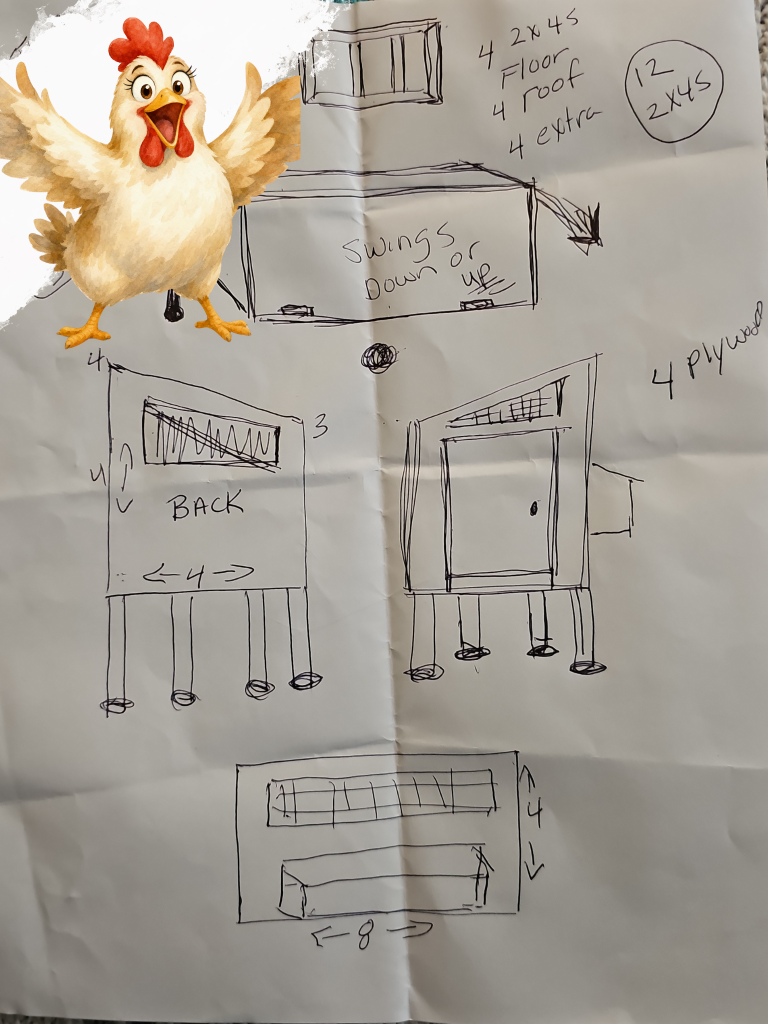
Buying several brand-new chicken coops would have cost a fortune.
So instead of asking, “What do I need to buy?” I started asking:
“What do I already have?”
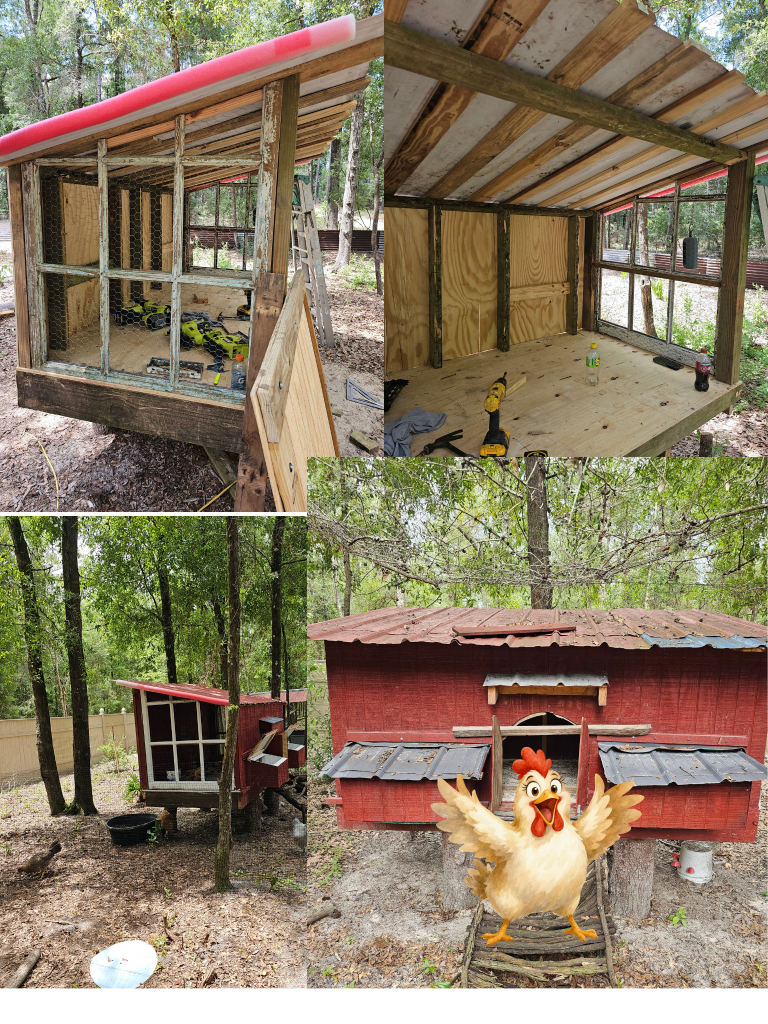
And apparently, I had the beginnings of a chicken village hiding all over the property.
We had old windows, plywood, leftover metal roofing, shingles, old metal louvered closet doors, an old playhouse and trees that had already been cut down.
I asked a friend to help me, and we started building.
The cut trees became posts.
Plywood became floors and walls.
Old windows became walls and let light into the coops.
Those old metal closet doors? We found another use for them too—they became clean-out doors.
Because the coops were raised off the ground, we cut trap doors into the floors so the chickens could go in and out.We used leftover metal for roofing and even siding on some of the coops.
We did have to purchase chicken wire for the fencing, but we reused as much as we possibly could.
And then, because plain chicken coops apparently weren’t enough for me, I hand-painted them and decorated them. 😂
They weren’t fancy store-bought coops.
They were better.
We built them ourselves, mostly out of things we already had.
Then the Babies Arrived
The chicks arrived in April.
About 30 of them.
And they couldn’t just go outside into those beautiful new coops.
They were babies.
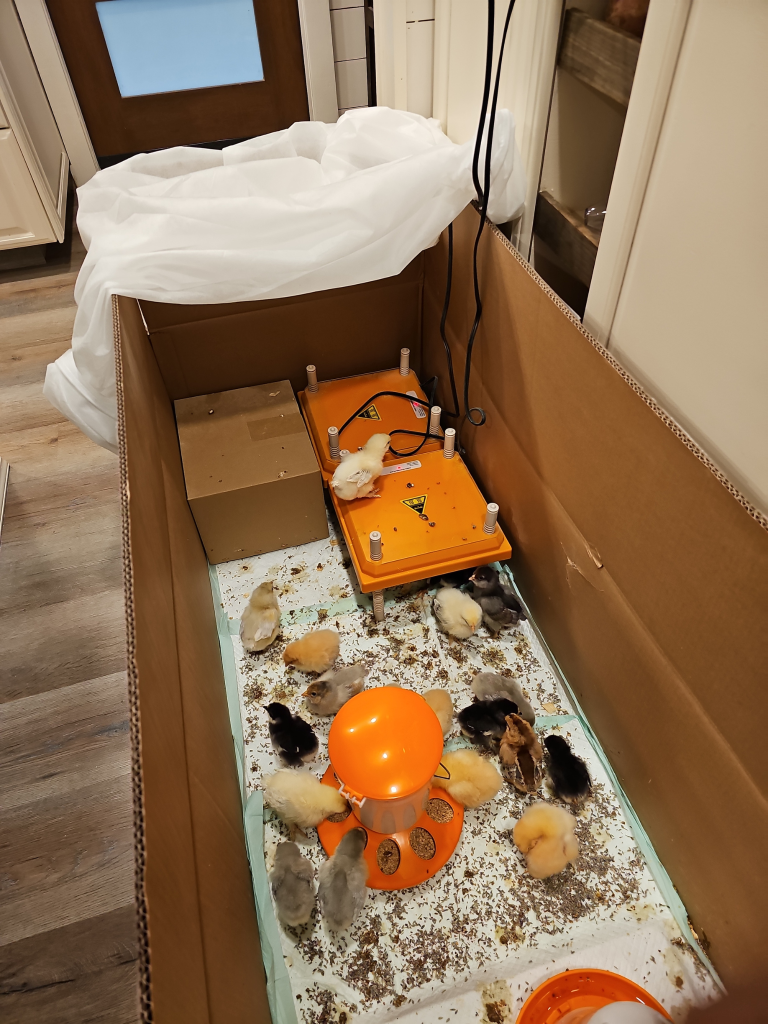
So for a while, I had around 30 baby chicks living inside my house.
If you’ve never raised that many chicks indoors, let me just say this:
They’re adorable.
They can be hilarious.
They’re messy.
And 30 tiny chicks can make a much bigger mess than you’d ever think possible. 😂
Here are some supplies we needed: heaters, feeders, waterers, and wood chips.
Moving the Chicks Outside
Eventually, they were old enough to move outside.
Then came the part that requires something I’m not always particularly good at:
Waiting.
I had built the coops.
Raised the babies.
Fed them.
Protected them.
Separated my breeding groups.
And waited for eggs.
About eight months later…
EGGS! 🥚
Turning Those Eggs Into a Business
Now I had to move from simply raising chickens to actually running a little hatching-egg business.
That meant learning the rules too.
I went through the process of having my flock tested and becoming NPIP certified, including testing related to pullorum-typhoid and avian influenza.
Then I was ready to try selling.
I put an ad for my hatching eggs on eBay.
And people bought them.
At first, I was making around $200 to $500.
After I’d been selling for about six months, there were times I was bringing in roughly $500 to $1,000 a month.
This picture was sent to me by one of my customers who bought Hatching eggs from me. These are the babies that hatched. ❤️
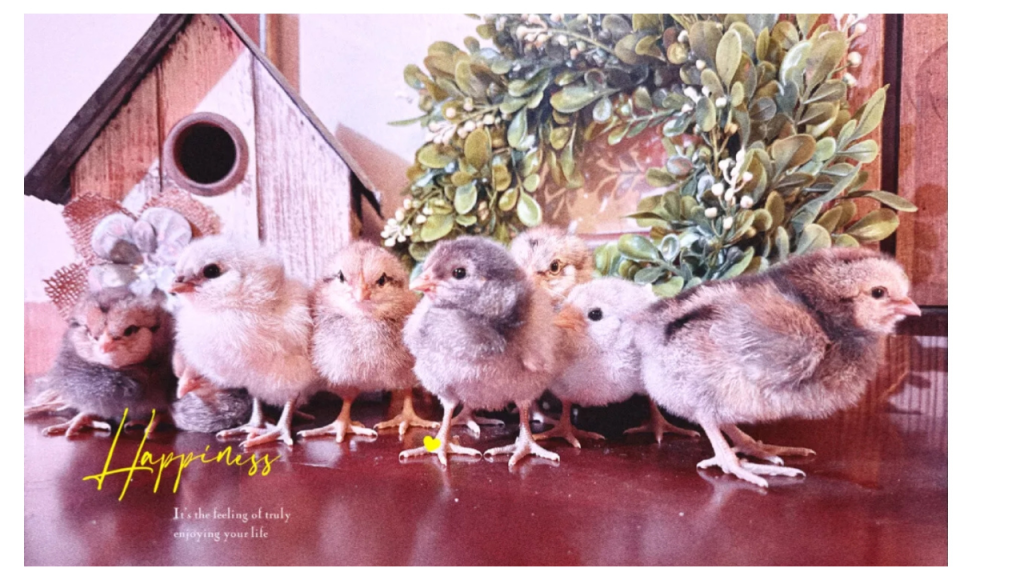
I was so proud I raised 30 baby chic’s, built 6 coops from what I had laying around, and started selling hatching eggs. This little business was working.
But before anybody starts picturing me sitting around counting egg money while chickens happily wandered through the yard, let me tell you something:
Those chickens made me work for every penny. 😂
The Part Nobody Tells You About Selling Hatching Eggs
Packing hatching eggs is extremely time-consuming.
These aren’t T-shirts you can toss into a box.
Every egg has to be handled and packed carefully because you’re trying to get something incredibly fragile through the mail intact—and hopefully still viable for the buyer to hatch.
I also had incubators of my own and hatched many baby chicks myself. Here’s the incubator I recommend
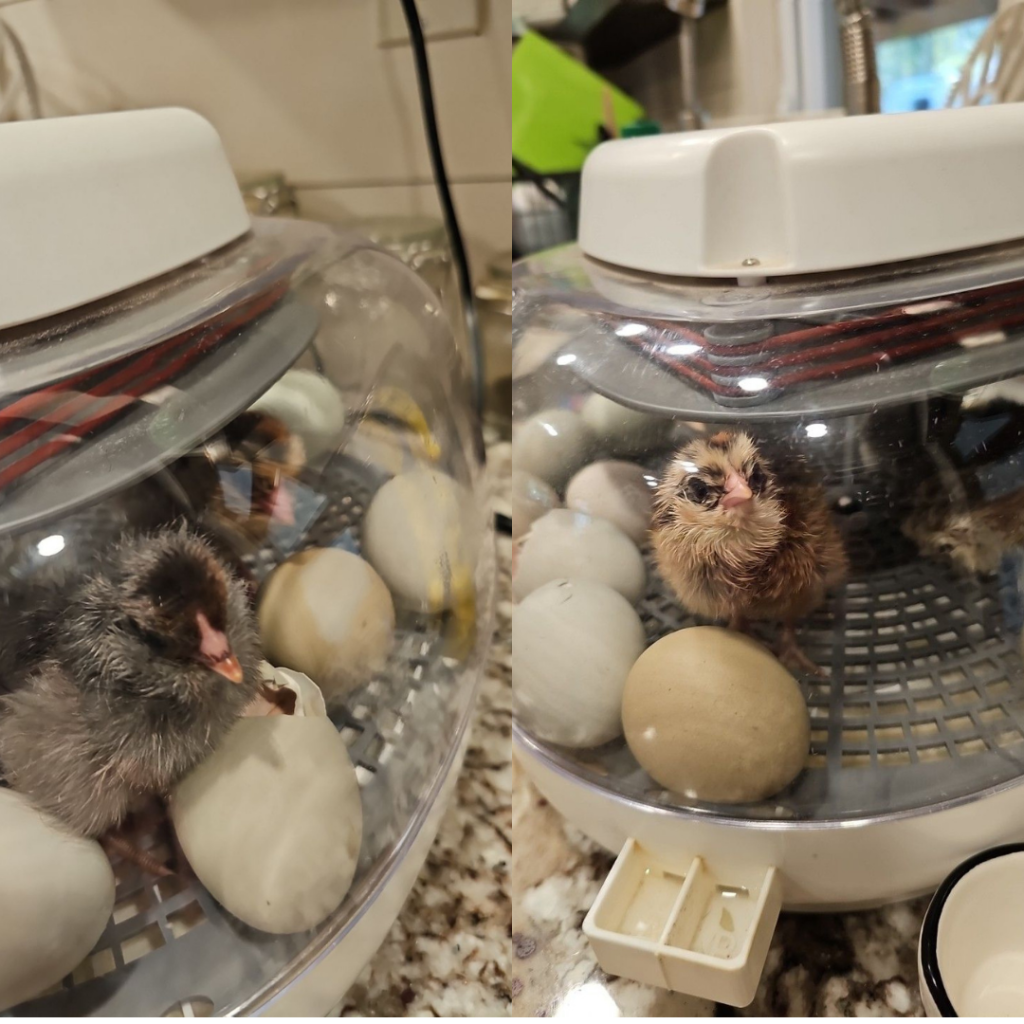
Watching that first little crack appear in an egg and eventually seeing a tiny chick work its way out never really got old.
But chickens don’t care that you’re trying to run a business.
Some don’t lay like they’re supposed to.
Others fight.
Some get sick.
Sometimes you lose one.
Feed gets expensive.
I learned that appropriate kitchen scraps could help supplement their feed and stretch the grocery bill a little further.
Then there were squirrels trying to get into everything and hawks watching from above. We covered areas with bird netting to help protect the chickens.
And then there were the roosters.
Each breeding group needed a rooster if I wanted fertile eggs.
Some roosters were fine.
And some…Well…
One of mine was named Lucifer.
I think that tells you just about everything you need to know about him. 😂
I’ll save Lucifer’s full story for another day.
For About a Year, It Worked
I did this for about a year, and I was proud of what I’d built.
Then my life changed in a way I never could have prepared for.
I lost my son to suicide.
After that, I couldn’t keep doing what I had been doing.
Eventually I sold my chickens
What the Chickens Taught Me
Sometimes I look at them and remember all those chickens running around—the babies, the eggs, the ridiculous roosters, the work, the mess and all the things that made me laugh.
And I miss those funny little creatures.
But I still have everything they taught me.
I know what worked and what didn’t.
Along the way, I learned where I wasted money and where I saved it.
I know what it’s like to build a coop out of whatever you can find, raise chicks in your house, deal with predators, hatch your own babies, keep breeding groups separated, pack hatching eggs and finally see someone pay you for something your chickens produced.
And that’s why I’ve decided to start sharing those lessons here.
Because if you’re thinking about getting chickens—or wondering whether your own backyard flock could become a little side business—I have a whole lot more chicken stories to tell you.
And yes…
eventually I’m going to tell you exactly what Lucifer did to earn his name. 😂🐔
“Sometimes I look at them and remember all those chickens running around—the babies, the eggs, the ridiculous roosters, the work, the mess and all the things that made me laugh.”
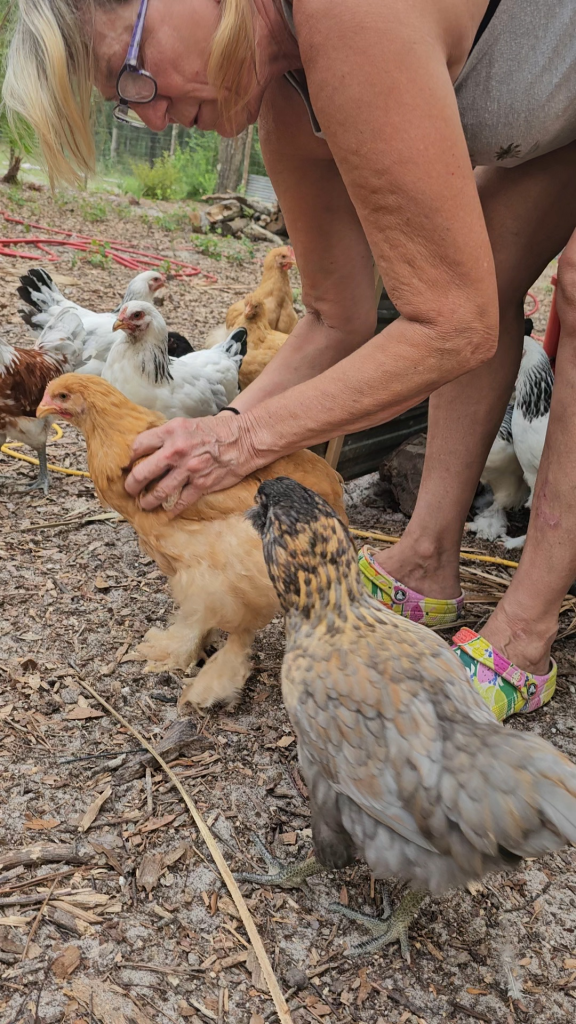
Looking back, I learned more from those chickens than I ever expected. I learned what worked, what didn’t, and how much you can build when you’re willing to use what you already have. And believe me, some of those lessons came the hard way.
In my next post, I’ll show you more about how we built those coops without spending a fortune—and some of the things I’d do differently if I were starting all over again today.
Now you know how to turn your chickens into a hatching egg business.
Want more ideas for turning what you know into income? Read my post, “10 Digital Products You Can Create This Weekend Even If You’re a Beginner.”