Wondering what to put in a family emergency binder? Start with important contacts, medical information, financial details, and the locations of documents your loved ones may need.
If someone in your family needed to find your important information today, would they know where to look?
Most of us have bits and pieces scattered around. A phone number is saved on our phone, insurance papers are in a drawer, and bills arrive through email. We know how our own system works, but explaining it to someone else can be a different story.
A family emergency binder brings those details together. It gives your loved ones a place to start when you cannot explain everything yourself.
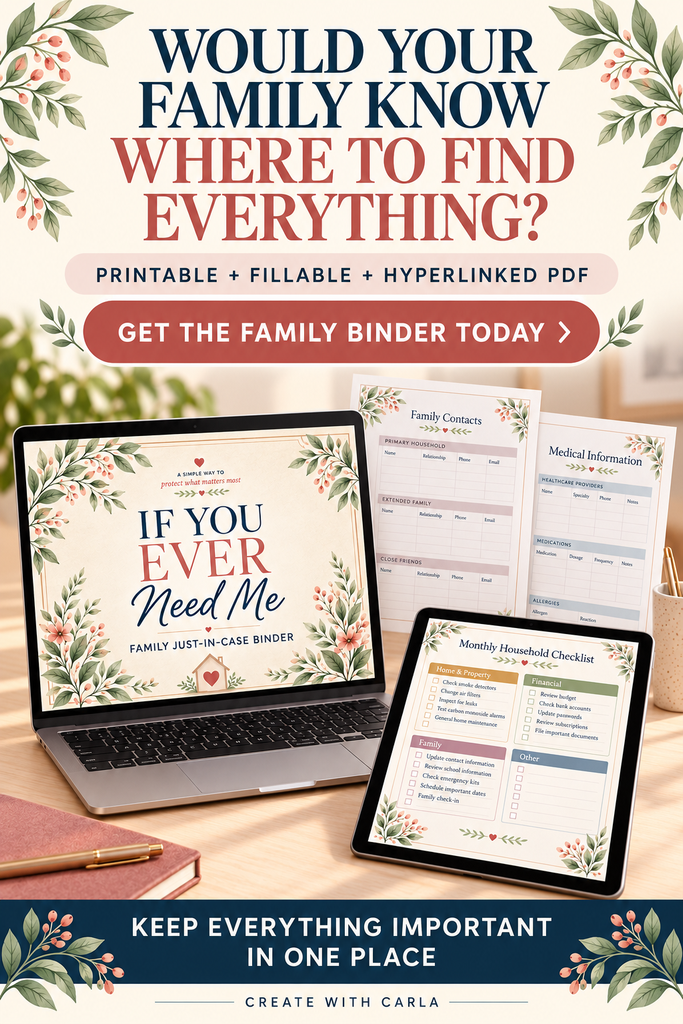
You do not have to organize your entire life in one afternoon. Start with the information your family would need first, then add a little at a time.
Start With Important Contacts
Think about who your family would need to call if you were sick, hospitalized, or unavailable.
Include names, phone numbers, and each person’s relationship or role. Your list might include:
- Family members and a trusted friend or neighbor
- Doctors and your preferred pharmacy
- Insurance contacts
- An attorney or accountant, if you use one
- Someone who can help with children or pets
Do not assume everyone has these numbers saved. Having them together can make the first few calls easier.
Add Medical Information and Medications
Write down the medical information you would want someone helping you to know.
Include your doctors, allergies, medical conditions, and a current medication list. For each medication, record the name, dose, and instructions shown on your prescription, along with the pharmacy you use.
You can also note where you keep your health insurance card and other medical documents.
Date these pages so your family can see when you last updated them.
Make a Simple Guide to Bills and Finances
Someone stepping in to help may not know which bills arrive each month or which payments happen automatically.
Make a list of your regular bills, including utilities, mortgage or rent, credit cards, insurance, and subscriptions. Note the company, usual due date, and whether the payment is automatic.
For financial accounts, record the institution’s name, contact information, and where statements are kept. Last four digits can help identify an account without writing down the full number.
The goal is to give your family a clear starting point and help them locate the right records.
Record Where Important Documents Are Kept
Your binder can act as a map to documents stored elsewhere.
Include the locations of documents such as your will, powers of attorney, advance directive, birth certificate, marriage records, property records, and vehicle titles, as applicable.
If an attorney or another professional holds copies, add their contact information.
An organizer does not replace legal documents. It helps your family find what you have already prepared.
Include Insurance, Home, and Vehicle Details
Think about the everyday things you manage that someone else might need to handle.
Record your insurance providers, policy references, and customer-service numbers. Add information about your home’s utilities, maintenance contacts, and any responsibilities that need regular attention.
For vehicles, include identifying details and where registration, insurance, and title documents are stored.
A short note about an easily overlooked task—such as a scheduled repair or a bill that arrives only once a year—can be helpful.
Remember Pets and Daily Routines
Our pets depend on us, and their routines may be familiar only to the person who usually cares for them.
Include feeding instructions, medications, the veterinarian’s number, and the name of someone who could help.
You can also leave notes about household routines or caregiving responsibilities. Think about what another person would need to know during their first day helping.
Leave Space for Personal Wishes
Some things do not fit neatly into a list of accounts or contacts.
You may want to leave a personal letter, explain preferences, or record wishes you have discussed with your family. You can also note who should be contacted about those arrangements.
These pages can be a place for your own words and the details you want your loved ones to understand.
Keep Your Binder Secure—and Tell Someone Where It Is
Because your binder contains private information, choose a secure place to keep it. Protect a digital copy as well, and avoid putting passwords or full account numbers in pages you might share.
Tell a trusted person where the binder is and how to access it when needed. A carefully organized binder is most useful when someone knows it exists.
Review it periodically and after changes to medications, contacts, accounts, or insurance.
What to Put in a Family Emergency Binder First
If this feels like a lot, begin with your emergency contacts. Next time, add your medications. After that, list your monthly bills.
Each completed page is one less thing your family may have to search for.
After losing my son unexpectedly, I experienced how difficult it can be to piece together important information while grieving. That was part of what inspired me to create my “If You Ever Need Me” Family Emergency Binder.
I wanted to make it easier to begin—with sections for contacts, medical information, finances, home details, pets, and personal wishes.
If you would like a ready-made place to organize your information, you can find my Family Emergency Binder in my Etsy shop.
Start small. You do not need a perfect binder to make a helpful difference for the people you love.